
About the course: For Non-Japanese people working in a Japanese company within or outside of Japan
Who This Program Is For Whether you are new to a Japanese company or have been there for years, you may have found yourself puzzled by: • Communication that feels indirect or unclear • Limited or confusing feedback from your manager • Meetings that seem long but unproductive • Difficulty building relationships with Japanese colleagues • Not understanding how decisions are really made If this sounds familiar, this program is for you. What You’ll Learn In this comprehensive 12-part audio program, you will gain practical insights and strategies to: • Communicate more effectively with Japanese colleagues • Understand what Japanese managers expect from you • Build strong working relationships inside your organization • Navigate meetings, presentations, and decision-making processes • Interpret subtle communication and reduce misunderstandings • Increase your effectiveness while reducing stress You’ll finally understand the “unwritten rules” of Japanese business—and how to work successfully within them. Program Overview This program consists of 12 expert-led audio sessions (approximately 1 hour each), covering key areas of success in Japanese organizations: Core Topics Include: • Working effectively with a Japanese boss • Understanding and influencing decision makers • Becoming part of the team • Building relationships with Japanese colleagues • Communicating across cultural differences • Giving and receiving feedback • Avoiding “meeting madness” • Interfacing with the parent company in Japan • Delivering effective presentations • Managing customer relationships • Aligning on expectations and “common sense” Meet the Experts This program features experienced professionals from Japan Intercultural Consulting who have worked extensively inside Japanese organizations across industries. Together, they bring over 350 years of combined experience working with Japanese companies. You’ll hear insights from experts including: • Former senior executives of Japanese multinationals • Cross-cultural consultants with decades of experience • Professionals who have worked both inside Japan and globally Each session focuses on a specific challenge and provides practical, actionable advice. What Makes This Program Different This is not general theory or abstract cultural discussion. You will learn: • What is really happening behind the scenes in Japanese companies • Why your boss and colleagues behave the way they do • How to adjust your communication for better results • Specific techniques you can apply immediately This is practical, experience-based guidance designed to help you succeed in real workplace situations. What You’ll Get • 12 audio sessions • Approximately 12 hours of expert instruction • On-demand access—learn anytime, anywhere • Practical strategies you can apply immediately Because this is audio-based, you can learn while commuting, exercising, or traveling. The Results You Can Expect After completing this program, you will: • Feel more confident in your interactions with Japanese colleagues • Understand expectations more clearly • Communicate more effectively • Build stronger relationships • Navigate your organization with greater ease

Jim Colby
Jim Colby is a 19-year veteran of Sony Electronics in the U.S., finishing his career there as Vice President of Human Resources. He was responsible for HR support for all of the company's business units and organizations throughout the U.S. as well as International Human Resources, Diversity and Compliance. His experience has given him deep insight into how cultural differences affect organizations operating globally, and how individuals can increase their effectiveness inside of global organizations. At Japan Intercultural Consulting, he has been focused on assisting our clients with matters related to post-merger integration, executive team development and retreat facilitation, strategy building and leadership development. A key challenge for non-Japanese working at Japanese companies' overseas subsidiaries is how to develop a positive and productive rapport. This becomes particularly important as one moves up in the company and takes on roles of increasing responsibility. In this session, Jim will discuss how to interface with the parent company in Japan in a way that generates the desired results. How to deal with frequent rotations, typical parent company expectations for interactions, understanding the hierarchy and decision-making process at the head office, and handling information requests will be covered. During Jim's interview you will discover... • The most important success factors for people at overseas subsidiaries of Japanese firms in dealing with the parent company • How to figure out who is doing what when it's not written down • How to decipher the hidden hierarchy at the head office along with the decision-making process • How to build relationships with people at the parent company • The unspoken yet key expectations the parent company has for employees of overseas subsidiaries • The head office looks at the subsidiaries as being “child companies.” How do you overcome this attitude? • Your contact at the head office just got transferred... what do you do? • Unique characteristics of budgeting and reporting in Japanese organizations you need to watch out for • The head office is continually asking you for more information – are you doing something wrong? • There's a Japanese expatriate controlling all interaction with the parent company and you feel excluded from the communication loop. What do you do?
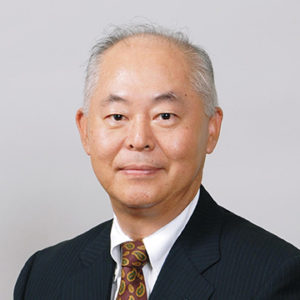
Tak Kawasaki
Tak Kawasaki had a 40-year career at the Tokyo-based multinational glass manufacturer NSG Group, where he held a variety of international posts. He spent 14 years in the U.S., including serving as President of NSG's manufacturing plant in Kentucky. He also served as head of the company's Asian business unit. At the company at the time of its purchase of the British company Pilkington, Tak was also involved in post-merger integration activities. He brings an insider's view of how Japanese companies operate and make decisions. At Japan Intercultural Consulting, he has been focused on providing training for Japanese who are managing non-Japanese staff, and for local hires of Japanese companies particularly in Asia. An important factor for succeeding in a Japanese company is a good relationship with one's supervisor, which can be challenging when there is a cultural gap. In this session, Tak will share his insights about the expectations that Japanese managers have of their subordinates, and how non-Japanese working for Japanese firms can develop strong relationships with their supervisors. How to draw out and interpret performance feedback, how to ask for support for career development, and how to handle negotiations concerning salary and working conditions will be covered. During Tak's interview you will discover... • The key expectations Japanese managers have of their subordinates • The best way to develop a good working relationship with a Japanese supervisor • How to deal with a Japanese manager who persists in "micromanagement" • What to do when your Japanese manager withholds all feedback and leaves you in the dark • The Ho-Ren-So technique of communication between manager and subordinate that is taught to new hires in Japan, and that Japanese expect you to automatically know • Japanese supervisors typically don't provide career development advice and support – here's how to get it • How to ask a Japanese supervisor for better salary or working conditions • How to immediately work more effectively with a Japanese boss

Andrew Bender
Andrew Bender began his career in Tokyo at JAFCO, Japan's largest venture capital company. Later he worked in development, production, and acquisitions of filmed entertainment for Fujisankei Communications in Los Angeles. He also headed up U.S. operations for a Japanese-owned animation and computer graphics house. Andy offers insightful perspectives on how non-Japanese employees and managers at all levels can address the "people" side of business with the Japanese. Since joining Japan Intercultural Consulting in 2001, Andrew has counseled clients in industries as diverse as manufacturing, management consulting, and entertainment. Relationship-building is critical when working with Japanese, whether they are people within your own company, or at customers or suppliers. In this session, Andy will discuss the most efficient and effective way to build relationships with Japanese, both when you're in person and when you're at a distance. What Japanese most value in relationships, how to handle social occasions, gift-giving, and holiday cards and other correspondence will be covered. During Andy's interview you will discover... • Why business relationships are absolutely crucial in Japanese business • The qualities Japanese value most in relationships • Key things to know about building relationships with Japanese in person • How to properly socialize with Japanese and avoid common missteps • How to foster excellent long distance relationships with Japanese at the head office • Appropriate ways to handle correspondence and holiday cards with Japanese • What you need to know about gift-giving in building relationships with Japanese

Sarah Fremerman Aptilon
Sarah offers a unique perspective on Japanese organizations. Early in her career, she spent seven years living and working at a Buddhist monastery in Kyoto, where she presented lectures, workshops, and study groups, and participated in daily business operations. Since joining Japan Intercultural Consulting, Sarah has worked closely with the Mexican operations of Japanese firms, particularly in the automotive, auto parts, and electronics industry. Now back in her hometown of Kansas City, Sarah conducts trainings and team buildings for Japanese firms in English, Spanish, and Japanese. Communication is one of the key challenges to non-Japanese doing business with Japanese individuals and organizations. In this session, Sarah will share techniques for deciphering often-subtle Japanese communication, and ensuring that your communication is not off-putting to Japanese. The discussion will cover directness of communication, attitudes towards conflict and disagreement, correctly interpreting non-verbal communication, and how to draw information out of Japanese and resolve ambiguity. During Sarah's interview you will discover... • The inevitable communication "triple whammy" that can derail your career if you're not prepared • The difference between non-verbal and indirect communication in Japanese culture • What you need to know about Japanese non-verbal communication styles • Strategies to communicate more effectively with Japanese colleagues who seldom verbalize their thoughts • Why don't Japanese just say what they mean? • Watch out! Examples of words that carry more than one meaning and could get you into trouble • How to discover what even the most indirect Japanese person is thinking • How to tone down your direct communication style when speaking with Japanese colleagues • How to help Japanese colleagues who are struggling with your language • How to become a better listener by knowing the characteristics of the Japanese language that affect how Japanese communicate in English or other languages • Do Japan and Latin America share any notable aspects of communication style?

Michael McKenna
Michael is a veteran consultant to the U.S. operations of Japanese firms on matters concerning human resource management, having worked for Buck Consultants, Towers Perrin, and Marsh USA. Having lived in Japan for over a decade, he is fluent in Japanese, and also served as Manager of Towers Perrin's Tokyo International Consulting Office for several years. At Japan Intercultural Consulting, Michael continues his work in advising Japanese firms on human resource management issues as well as matters of cross-cultural communication. Meetings are one the things that tend to be most frustrating for the non-Japanese employees of Japanese organizations. There are so many of them, and they don't always feel very productive. In this conversation, Michael will address the different assumptions that Japanese and non-Japanese tend to bring to meetings, and how this can lead to misunderstandings and marathon conversations. How to plan the timing, topics, and approach to meetings to improve efficiency and effectiveness will be discussed. During Michael's interview you will discover... • Why Japanese organizations have so many meetings and how to cope • Ways you might reduce the number of meetings • The surprisingly different expectations that Japanese and many non-Japanese tend to have about meetings • How does the Japanese sense of formality affect the way meetings are conducted? • Suggestions for non-Japanese to successfully manage this formality difference • Why direct disagreement, debate, being challenging or playing devil's advocate can cause you an immediate loss of face, and what to do instead • How Japanese decision-making differs greatly from other cultures • What is expected of you when a decision needs to be made (it's not what you're accustomed to) • How the language barrier affects meetings • How to make meeting content more accessible despite the language barrier • When and how to successfully use a translator

Pernille Rudlin
Brought up partly in Japan and partly in the U.K., Pernille worked for nearly a decade at Mitsubishi Corporation both in London and Tokyo, and at Fujitsu in the U.K. for three years. Pernille is an expert on the communication challenges faced when Japanese and people from other countries work closely together, and has a particular interest in the topic of customer service. At Japan Intercultural Consulting, Pernille heads up our European operations and conducts seminars for both Japanese and European audiences on cross-cultural communication, team building, and post-merger integration. The old saying goes that "The customer is king" but Japanese have an alternative version: "The customer is God." And indeed, that well captures how Japanese customers, both internal and external, expect to be treated. This means that satisfying those customers can be exceedingly tricky. In this interview, Pernille will share what Japanese customers most want, and the best ways to provide it. The art of omoiyari -- anticipating customer needs before they are verbalized -- will be analyzed and examples of how to do it provided. You'll come away from this conversation with some great ideas to keep your Japanese customers happy. During Pernille's interview you will discover... • Why Japanese customers are famous for being difficult to satisfy, and what makes them so fussy and particular • The different approach to use when trying to win business from a Japanese customer, as opposed to a western customer • The best way to establish your credentials with Japanese businesspeople • How to choose the main client contact for the customer • What to keep in mind about negotiations with Japanese customers • The best way to ensure smooth communication with a Japanese customer • What omoiyari is and why you must know it • How to deal with unreasonable demands from a Japanese customer • You've made a mistake or there's a problem, and now your Japanese customer is upset. What should you do? • What Japanese expect in terms of customer service • The differences between dealing with internal and external customers and how best to deal with each

Claudia Romberg
Claudia lived in Japan for seven years, where she worked as a marketing consultant for Dentsu and other Japanese companies. Since returning to Europe she has worked as consultant, trainer and coach with more than forty companies, joint ventures and M&As in different industries (automotive, electronics, manufacturing, pharmaceutical, consumer products, etc.) and countries (Germany, Netherlands, Belgium, Austria, China and Japan). Claudia specifically focuses on the question of how cultural backgrounds influence a company's performance system and helps cross-cultural teams to improve and align their processes accordingly. Teamwork is never simple even within the same culture, and when people from different cultures work together on teams, things can become even more complicated. It's easy to blame "miscommunication" for all problems, but Claudia will help us become aware of how unexamined differences in business practices are often at the root of the challenges that teams experience. We'll cover things that companies need to address in order to increase the performance of multicultural teams, and important assumptions about business practices that Japanese bring to the team environment. During Claudia's interview you will discover... • Communication is key but it's not enough when improving performance. Here's what else you need to know and do • Factors other than communication that can lead to problems when people of different cultural backgrounds work together • How Japanese methods of getting work done differ from those used in other countries • Beware – what might look like a communication problem can actually be something altogether different • How deep differences in the approach to business processes can be used to improve performance

Yuko Morimoto
Yuko began her career at Chase Manhattan Bank in Tokyo, where she worked for over 10 years and served as the Global Coordinator of a global team and facilitated the communication among team members (including Japanese, other Asians, North Americans and Europeans) on international projects. Yuko then moved to Silicon Valley where she lived for over ten years providing communication training and executive coaching for the employees of multinational companies. Yuko joined Japan Intercultural Consulting upon her return to Japan in 2009, and works with our clients as a facilitator and a coach. Using her career experiences spanning the Pacific, she provides insights on how to overcome common cultural challenges with grace and ease. Non-Japanese who work for Japanese firms often are concerned about a lack of feedback -- both positive and negative. Why do Japanese supervisors give so little feedback? And what can an employee do in order to get the information they need in order to know how well they are doing their job? Yuko will discuss the cultural background of how Japanese approach feedback, why Japanese tend to be reluctant to give positive feedback, the meaning behind detailed "corrections" from Japanese, and what to do if you are in a situation where you need to give feedback to someone Japanese. During Yuko's interview you will discover... • Your Japanese supervisors and co-workers aren't giving you feedback – here's what to do • Your Japanese supervisor is giving you feedback in the form of many minor negative comments, and it doesn't seem all that helpful. Why is she doing this and what should you do? • Your Japanese supervisor hasn't given you one piece of positive feedback, ever. Is your job in jeopardy? • Your boss might be giving you constructive feedback and you don't even know it. Here's how to tell • You want to give feedback (positive or negative) to a Japanese coworker. Careful! Here's what you need to know and the words you can (sometimes) use • How to improve your relationship with a Japanese supervisor or Japanese colleagues
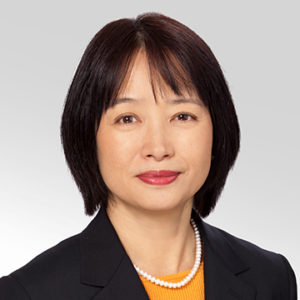
Michiko Schwab
Michiko began her career with stints at firms including Toppan Moore Systems and Itochu International, where she gained exposure to various aspects of the global operations of Japanese firms. Michiko has been a consultant and coach since 1998, focusing on cross-cultural communication training for both American and Japanese participants, and coaching to help clients become better leaders and communicators across culture. She also has experience coaching executives involved in M&A and other organizational transformations. She brings this deep experience and insight to bear for Japan Intercultural Consulting's clients. Presentations are a key part of life in a Japanese company, both internally and also when interacting with Japanese clients. They are also one of the venues where non-Japanese employees are most likely to interact with a wider group of people within the company, including more senior ones. When presenting to Japanese, it's important to keep in mind Japanese cultural preferences about presentation of information, as well as the need to address the language barrier. We'll discuss with Michiko how to prepare for a presentation to Japanese, what your PowerPoint deck should contain and what it should look like, how to manage the flow of the presentation, and how to read the reactions of Japanese participants. During Michiko's interview you will discover... • Many non-Japanese complain about Japanese falling asleep in presentations or meetings. Are you really that boring, or is something else going on? • What Japanese love to see in a presentation • The difference between a Japanese and an American PowerPoint presentation • How and when to properly use graphical elements • Watch out – Can your presentation to be too slick-looking for Japanese tastes? • The difference in the type and quantity of information Japanese want in a presentation • How a Japanese presentation differs from an American one in the order of topics and flow • Japanese pet peeves about how Americans give presentations that you need to know • When you get few questions and little discussion after your presentation, what does it mean? And how should you get feedback on how it was received? • Should you send presentation materials to Japanese before the presentation, or not? • Insider tips on how to make your presentation to Japanese hugely successful

Adam Komisarof
Adam Komisarof is a veteran interculturalist based in Tokyo. One of his key interests is in how non-Japanese living in Japan can effectively integrate into Japanese workplaces and develop strong working relationships with their Japanese colleagues. He's published two books on this topic, On the Front Lines of Forging a Global Society: Japanese and American Coworkers in Japan and At Home Abroad: The Contemporary Western Experience in Japan. He's also active in conducting cross-cultural workshops for both Japanese and non-Japanese participants, and provides unique insights to our clients at Japan Intercultural Consulting. Feeling left out of the team in your Japanese workplace? That's a common sentiment of non-Japanese employees of Japanese firms. Japanese culture is group oriented, so teams become very cohesive. Which is a good thing, if you know how to integrate yourself into the group -- and can leave you feeling out of the loop if you don't. In this session we will be discussing with Adam how to integrate successfully into a Japanese workplace, without losing your identity in the process. We'll discuss strategies for participation in group activities, how to be viewed as a reliable team member, and whether it's important to be able to speak Japanese well. During Adam's interview you will discover... • Why it's so hard to break into a Japanese workplace, and how to finally become a member of the team • The most successful acculturation strategies non-Japanese have used in Japan to fit in • Examples of non-Japanese who have successfully integrated into Japanese work teams and how they did it • What if you don't speak Japanese – must you learn the language or are there other methods of fitting in with Japanese workers who speak your language? • What “Going Native” means and what Japanese think of you if you do it • How to integrate into a Japanese work team without losing your identity • How to know when to integrate into a Japanese work team and when to stay a permanent outsider • Seasoned advice for non-Japanese who are trying to integrate into Japanese workplaces - what works and what to avoid at all costs

Andrew Horvat
For more than two decades, Andrew filed stories from Japan for the Associated Press, the Los Angeles Times, and London's Independent newspaper. Later he directed the Japan office of the Asia Foundation, a San Francisco-based non-profit before moving on to manage and teach at Stanford University's overseas studies program in Kyoto. He has also held teaching positions at Japanese universities. As reporter, administrator and university instructor, Andrew has had to reconcile different ways of thinking and doing things. It is this experience that Andrew brings with him to Japan Intercultural Consulting, where he works with Japanese and non-Japanese audiences helping them to enhance their understanding of each other. So many of the challenges that non-Japanese working in Japanese companies face have their root in the fact that not everyone is on the same page -- they are working from a different set of assumptions, and with different information. These all fall under the category of what Japanese call joshiki -- common sense. In this session, Andrew will discuss how people in Japanese firms develop a shared joshiki, and how non-Japanese can learn it as well. Topics to be covered include initiation rituals in Japanese firms, the nemawashi consensus-building process, and Japanese etiquette considerations. During Andrew's interview you will discover... • Why Japanese workers often seem to be on the same page while non-Japanese workers can feel like they've been left out of the loop • 4 ways to stop feeling like and being an outsider and become part of a cohesive work team • How to use nemawashi to promote alignment and harmony • How to use PowerPoint in a joint effort with Japanese colleagues to get on the same page with them • Why Japanese workers judge you based on your acquaintance with Japanese customs and manners, and the 5 customs you must never break • Everything you need to know about proper Japanese etiquette to become one of the 'family,' rather than the weird uncle or aunt ostracized to the kiddy table

Rochelle Kopp
Rochelle Kopp is founder and Managing Principal of Japan Intercultural Consulting, an international training and consulting firm focused on Japanese business. She is a recognized authority on Japanese culture and business practices, particularly Japanese communication style and organizational behavior and decision-making in Japanese firms. A veteran facilitator experienced in delivering training and consulting to both Japanese and non-Japanese, Rochelle has a particular specialty in facilitating cross-cultural team-buildings and other programs for executives. Rochelle gained firsthand experience of Japanese corporate culture when she lived in Japan and worked at the Tokyo headquarters of a major Japanese financial institution. Since that time, as a consultant Rochelle has worked closely with numerous Japanese companies of various sizes and in a wide variety of industries, including many of Japan's most prominent firms. She brings these first-hand insights into her seminars and consulting on Japanese business culture, helping participants develop improved relationships and avoid cultural misunderstandings. Rochelle is the author of The Rice-Paper Ceiling: Breaking Through Japanese Corporate Culture and over twenty books in Japanese. She writes for various Japanese and American publications, including regular columns for the Asahi Shimbun. During Rochelle's interview you will discover... • The key cultural factor that explains the way that Japanese companies make decisions • What is it in Japanese culture that makes Japanese so uncomfortable with risk • What the decision-making process looks like in a Japanese firm • What some of the challenges are that can come up when a Japanese organization is going about its normal decision-making process, but non-Japanese are involved in it • What some of the strategies are that non-Japanese can use to influence the decision-making in a Japanese organization
Curriculum
-
1
Skillful Interface with the Parent Company in Japan
-
(Included in full purchase)
Jim Colby: Senior Consultant, Japan Intercultural Consulting, N. California
-
(Included in full purchase)
-
2
Working with a Japanese Boss
-
(Included in full purchase)
Tak Kawasaki: Senior Consultant, Japan Intercultural Consulting, Tokyo
-
(Included in full purchase)
-
3
Relationship Building with Japanese - in Person and From Afar
-
(Included in full purchase)
Andy Bender: Senior Consultant, Japan Intercultural Consulting, S. California
-
(Included in full purchase)
-
4
Same Words, Different Meanings -- Effective Communication with Japanese
-
(Included in full purchase)
Sarah Fremerman Aptilon: Senior Consultant, Japan Intercultural Consulting, Kansas
-
(Included in full purchase)
-
5
Avoiding Meeting Madness in a Japanese Company
-
(Included in full purchase)
Michael McKenna: Executive Consultant, Japan Intercultural Consulting, New York
-
(Included in full purchase)
-
6
Omoiyari - Dealing with External and Internal Japanese Customers
-
(Included in full purchase)
Pernille Rudlin: European Representative, Japan Intercultural Consulting, U.K.
-
(Included in full purchase)
-
7
Influence of Cultural Differences on Business Processes - How to Improve Performance
-
(Included in full purchase)
Claudia Romberg: Facilitator, Japan Intercultural Consulting, Germany
-
(Included in full purchase)
-
8
Feedback - Receiving from and Giving to Japanese
-
(Included in full purchase)
Yuko Morimoto: Facilitator, Japan Intercultural Consulting, Tokyo
-
(Included in full purchase)
-
9
How to Keep Japanese From Falling Asleep in Your Presentation
-
(Included in full purchase)
Michiko Schwab: Consultant, Japan Intercultural Consulting, New Jersey
-
(Included in full purchase)
-
10
Becoming Part of the Team in a Japanese Workplace
-
(Included in full purchase)
Adam Komisarof: Facilitator, Japan Intercultural Consulting, Tokyo
-
(Included in full purchase)
-
11
Getting on the Same Page in a Japanese Company - Why it is Important and How to Do it
-
(Included in full purchase)
Andrew Horvat: Facilitator, Japan Intercultural Consulting, Tokyo
-
(Included in full purchase)
-
12
Understanding and Influencing Decision Makers in a Japanese Company
-
(Included in full purchase)
Rochelle Kopp: Managing Principal, Japan Intercultural Consulting, N. California
-
(Included in full purchase)
Succeeding in a Japanese Company: A 12-Part Expert Audio Program
Practical strategies from 12 experienced professionals to help you communicate effectively, build relationships, and succeed in a Japanese corporate environment.
$127.00